
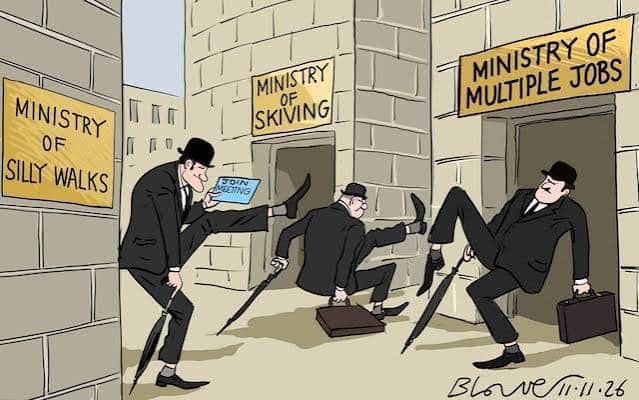
Image from The Telegraph
A civil servant has just been convicted of fraud for secretly holding down up to five full-time government jobs at once, pocketing nearly £350,000 of your tax money.
His manager at Defra said he had to tell him what to do the whole time. Really? He obviously didn’t do a very good job of it.
Kashim Chowdhury’s camera stayed off for four months, ‘technical problems’ apparently. There were no formal performance measures, so he was made permanent and stayed two years, juggling four other civil servant jobs and multiple sick notes.
The fraudster is the headline, but I think these woeful “managers” are the real story.
This is extreme organisational drag, the productivity blockers I speak about. Nobody is accountable for even the basics: knowing what people are working on, setting clear expectations or measuring output.
In one survey, 76% of civil servants said their organisation doesn’t tackle poor performers well. A former senior civil servant pointed to fear of drawn-out grievances as the reason many managers look away.
Someone always pays. When one person’s workload quietly vanishes, someone else’s doubles: the curse of the competent. You risk your best people burning out or leaving for a manager who actually manages.
Eighty-five per cent of managers are accidental managers. They are promoted for being good at the job but never trained to have the hard conversation. If they dodge it, the drag builds: what I call the normalisation of sloppy standards. If they are frightened of being called a micro-manager, they go too far in the other direction and become laissez-faire instead.
I don’t want to hark back to the bad old days when there were ashtrays on desks instead of computers, but at least new employees had direction and structure then. Coaching was never intended to replace basic training or the unwritten rules of professional behaviour.
Here’s my article on everything you need to know if you are a new manager.
You don’t need a fraud case to find weak links in your own organisation. Three questions:
- Can your managers say what each person is working on, without guessing?
- Who is quietly picking up someone else’s work to get it over the line?
- Who is frightened of giving feedback?
Call me old school if you like, but call me….